Search This Blog

Tuesday, March 24, 2015

Is your chimney tall enough to work right?


By Marge Padgitt

Fireplaces and wood-burning stoves only work right when everything is built or installed correctly, and that includes the height of the chimney. There are several factors to take into consideration when planning for the termination height of a masonry or factory built chimney system. 
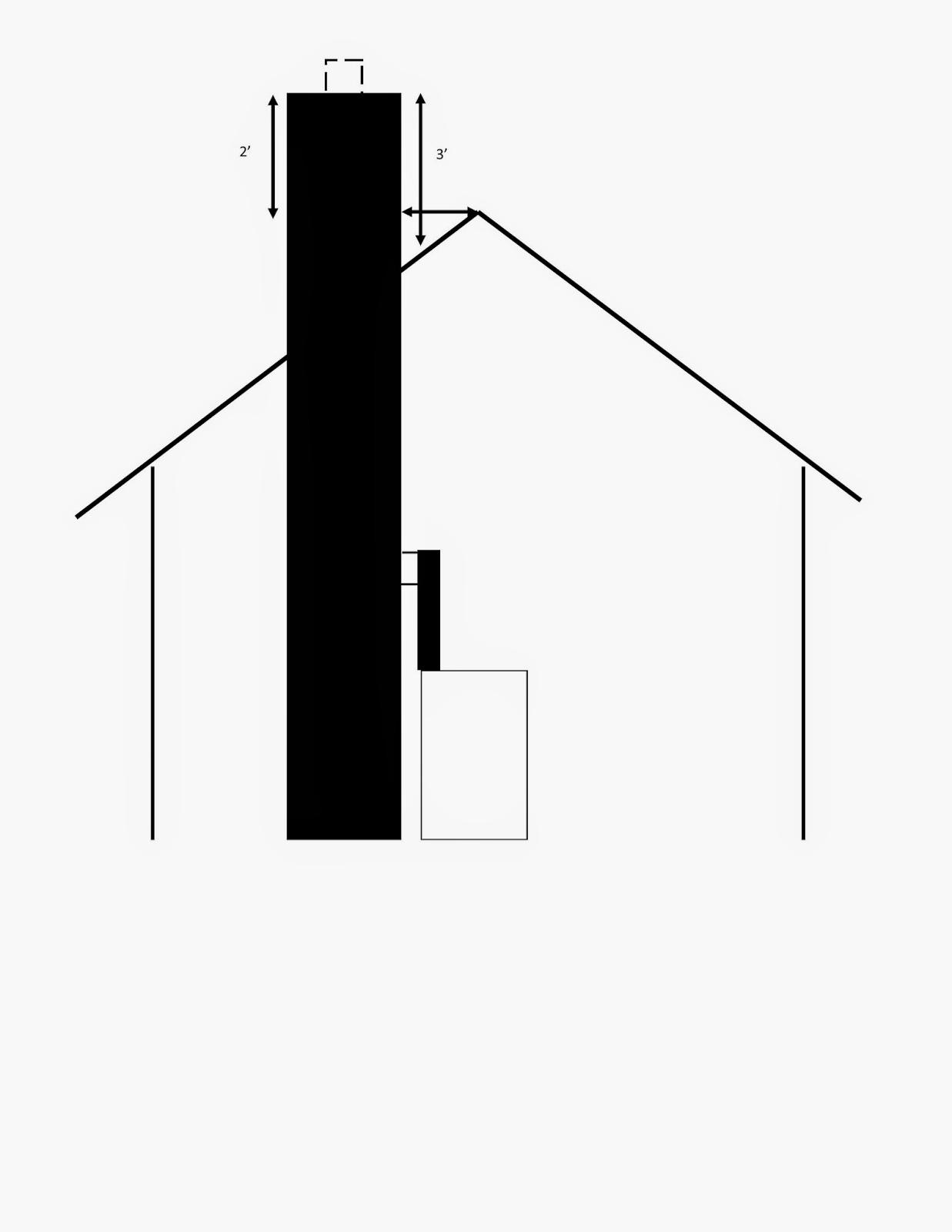
When building, or rebuilding, a chimney the builder should check the height to be sure that it not only conforms to National Fire Protection 211 Standards, which is the standard used in the industry for chimney construction, but also conforms to International Residential Code requirements. Both the standard and the code require that a chimney be three feet taller than the high side of the roof where it exits, and two feet taller than anything (roof, trees, dormers, etc.) within ten feet.  This is the first step in determining what the finished height of the chimney should be. If a fireplace smokes, the height of the chimney could be a factor.

Short flues: Additionally, keep in mind that a short flue (under 12’) may not draft correctly, so the chimney height may need to be extended if a fireplace is on an upper level of the home. It is generally accepted in the industry, although not a code requirement that flues under 12 or


15 feet in height may not draft well.  This may mean that the chimney height needs to be taller than code requires so it will function properly. 

Stack effect: The second factor to consider is the construction of the home. If a chimney is located on a room addition or end of a house, and the main section of the house is taller than the chimney, the house will act like a chimney and pull air upwards. This can cause what is known as “Stack Effect,” and pull smoke back in to the house from the fireplace while it is in operation, and smells when it is not in use.  For this reason, always plan the location of a chimney carefully. 

Trees: If trees or branches are within ten feet of the chimney they can affect draft and cause downdrafts.  If necessary, have trees and limbs cut back further than ten feet away.  

What not to do: Don’t ever add a section of tile flue liner to the chimney to make it taller without extending the exterior brick chase at the same time. Flue liner joints must be below the exterior in order to prevent them from falling over, and if installed incorrectly can be a hazard. 

Homeowners may want to consult with their professional chimney sweep before adding a room addition or constructing a new home to determine the best location for the chimney and fireplace. In some cases, the chimney simply cannot draft correctly due to the location and house construction, and it may need to be built higher, or removed altogether. An alternative fireplace, such as a direct vent gas insert, may be a good alternative to an open wood-burning fireplace in

some cases. Direct vent fireplaces are closed sealed systems that use outside air for combustion and are not as affected by the house construction as open fireplaces. 
___________________________________________________

Marge Padgitt is a CSIA Certified Chimney Sweep and NFI Certified Woodburning Specialist. She is a 30-year industry veteran and has written over 200 articles. Marge is the author of The Chimney and Hearth Pro's Resource Book and The Homeowner's Chimney and Fireplace Manual. See more info at www.hearthmasters.net. 

Masonry contest in April of 2015

The Masonry Heater Association of North America is hosting a contest at their annual meeting in April of 2015 at Little Switzerland, North Carolina. The contest categories are Masonry Heater, Masonry, and Bake Oven. To be eligible to enter the contestant must be a member of the MHA and submit a portfolio of the project at the annual meeting. First, second, and third place winners receive a trophy and their project is featured on the MHA website. The entrant does not need to be present to win. To see the complete rules and entry form and past contest winners visit www.mha-net.org.

Sunday, March 1, 2015

Masonry heater workshop April 13-19, 2015

The Masonry Heater Association of North America will present a masonry heater, bake oven, and masonry skills workshop at their annual meeting at Wildacres Retreat in the Blue Ridge Mountains north of Asheville, North Carolina April 13 – 19, 2015. 


Masonry heaters are site-built wood-burning appliances that radiantly heat a home with wood.  They are very efficient and use relatively small amounts of wood heat without the use of electricity, gas, fans, or ducts. Wood is burned in a firebox, which connects to channels inside a large thermal mass.  After the fire is out the appliance gradually radiates heat to the living space for many hours without causing large temperature fluctuations or drafts.


Brick masonry heater with
brick oven by Gene Padgitt
The annual meeting and workshop will include hands-on building a Rocket Heater Incorporated in a Masonry Bell, Five Run Masonry Heater with testing demo, Finnish ContraflowHheater for Beginner masons, Bake/pizza oven with vaulted arch, Grundofen Cabin Stove with a Cooktop, a bricklaying clinic, and Building a Masonry Smoker.


Classroom seminars include Google Sketch-up Clinic with Boris Kukolj, My Masonry Heater Smokes - Yikes!, Masonry Heater Challenges in Australia, and Untold Stories and Oops that Confront a Masonry Heater Builder. The Heater Mason Education and Development class will be held throughout the week.


The annual Design/Build Contest for masonry heaters, bake ovens and masonry will be judged during the week and trophies will be awarded at the final meeting.


An auction and pizza party are held every year.


For more information on how to join the MHA or attend the workshop contact Richard Smith, Executive Director, at 520-883-0191, e-mail execdir@mha-net.org or visit www.mha-net.org.

Cures for hard-starting wood-burning stoves

In the middle of winter when temperatures are very cold and the wind is biting, a nice cozy fire to warm up to is what many people look forward to at the end of the day. But some wood-burning stoves just won’t start, or take forever to get going, and that can be extremely frustrating.

We had this issue just yesterday when my husband started up the wood stove at 630 p.m. after we had both been out all day. The stove was cold, there were few embers left from the morning fire, and the temperature outside was 22 degrees not counting the wind chill factor. The Class A stainless steel chimney was very, cold and the stove just didn’t want to start.

There are several factors that can affect wood stove starts:
  • Cold air falls, so the air in the chimney pushes downward making it more difficult to get a stove started on very cold days. This applies to metal chimneys and masonry chimneys.
  • Inadequate air supply will hinder or make it impossible to get a fire going.
  • Wet wood is hard to start and burn and should never be used.
  • Stoves located on lower levels are affected by negative house pressure.
Regency wood stove
Solutions to these issues can involve opening a door or window to get adequate air needed to start the stove, or installation of a whole-house ventilator to be sure that there is adequate air for the house in general, and for the stove in particular. If the stove is located on a lower level negative pressure will also work against it, so the installation of a chimney pipe heater will likely be necessary. The heater can be installed on a stove on any level to make starting easier. What the heater does is keep the chimney warm so that draft is easy to establish, and it also kicks in when the stove is cooling down so that there is no smoke backup.

Always use dry wood (hard or soft) with 20% or less moisture content. Investment in an inexpensive moisture meter will assure that the wood is dry enough to burn.
Start a fire using very small pieces of kindling or Fatwood (dry pine). Start a fire using the top-down burn method with kindling on top and larger pieces below it. This method makes the fire burn longer and is more efficient and easier to start.

According to the Midwest Chimney Safety Council, when planning location of a wood stove, try to place the stove in the center part of the house and have less chimney exposed to the exterior. Besides being the best location to distribute heat evenly throughout the home, the less outside exposure for the chimney the better. The house will keep the pipe warmer and make it easier to start a wood-burning stove and keep the fire going.

When starting a wood stove, open up the air supply doors fully to let in as much air as possible. After the fire is going, slowly close these doors, leaving enough of an opening for the fire to keep going without having roaring flames. A fire that is too hot can cause overheating of the stove and/or a chimney fire. Keep a stove thermometer on the stove to regulate temperature, which should be between 400 – 600 degrees.

For more information:
Chimney Safety Institute of America
Midwest Chimney Safety Council
Hearth, Patio, and Barbeque Association
National Chimney Sweep Guild