Search This Blog

Showing posts with label kansas city. Show all posts

Sunday, February 9, 2020

Masonry repairs should be done in the spring

By Marge Padgitt


Badly spalling bricks on a chimney
If there are pieces of bricks or stones lying around the yard or driveway, it could be a sign that masonry repair is needed. The first place to look for damages by cold, freezing rain, and wind is the chimney since it is the area most exposed to the elements.

Signs that repairs or rebuilding is needed are missing or deteriorating mortar joints, cracked bricks or stones, or faces of masonry popped off. This is due to the penetration of water into the masonry- and when water freezes it expands, which usually results in the face of a brick or stone breaking off.

Badly spalling bricks
Unfortunately, many chimneys are built with soft type bricks rather than hard type bricks due to the cost.  Soft bricks absorb moisture more easily than hard bricks. After a few years, the soft bricks will begin to show damage, but after 30 years any type of brick or stone chimney will likely show damages of some type, if only to the mortar joints.  In some cases, masons have found completely deteriorated bricks with hard mortar left behind. In other cases, the bricks are good but the mortar is severely deteriorated or missing altogether. When this occurs it is a sign that the wrong type of mortar was used.  For this reason, the Midwest Chimney Safety Council recommends that chimneys should be built or reconstructed using hard bricks and the right type of mortar which will last many years longer than those built with soft masonry units.

Mortar deteriorated so badly that
the chimney is falling apart
Mortar sets up better when the work is done in the spring when temperatures are moderate so the curing process can complete without issue. If the temperature is too cold, the mortar can crack and take a long time to cure. If the temperature is too hot the water in the mortar may migrate to surrounding masonry and shrink. Professional masons can control some of this by adding an accelerant in cold weather or soaking bricks in water before using them in hot weather, but they much prefer working with masonry in ideal weather conditions.
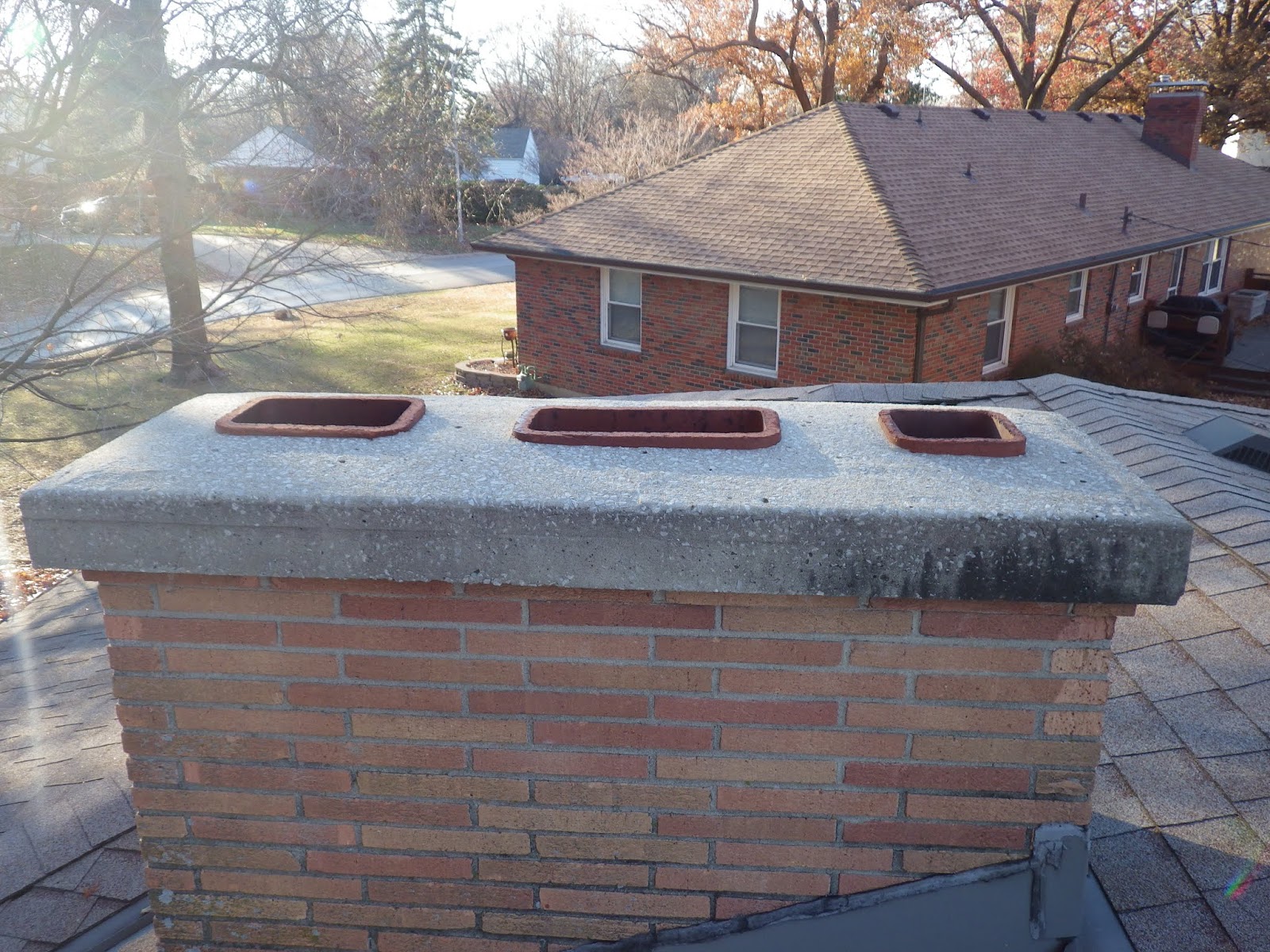
Cement cap with drip edge
The cement cap (crown) should be inspected in the spring to assure that it is in good condition with no cracks, deterioration, or lifting. The cap serves as a roof for the chimney and keeps the elements out of the interior chimney chase where rain can cause damage to the interior flue, smoke chamber, damper, and firebox. Any small cracks or gaps should be filled with high temp silicone, but if large cracks, severe deterioration, or missing sections of the cap exist a new cap should be constructed.  As of 2012, the International Residential Code required a poured formed crown with a drip edge to better protect the chimney from damaging rainwater. The old-style crowns with a slope but without a drip edge actually contribute to the fast deterioration of masonry at the top part of the chimney, so this newer style is a big improvement.
________________________________________

Marge Padgitt is the CEO of HearthMasters, Inc. and HearthMasters Education in Kansas City, Missouri. Contact her at hearthmastersboss@gmail.com. 

Wednesday, September 11, 2019

The signs say heavy snow and cold weather for Kansas City


The rabbits, cats, and dogs in the Kansas City area have a noticeably heavy coat right now – according to folklore heavier coats on any of our animal friends indicate very cold wet weather coming soon. But that is not the only way to predict the weather using non-scientific means.

Persimmon Seeds: According to Mike Dougherty of Tree Management Company in Lenexa, Kansas, find persimmon fruit in the supermarket or on a persimmon tree in your neighborhood. Note: You can eat persimmon fruit but most people don’t think it is very tasty and prefer to leave it for the deer, squirrels, and raccoons. The fruit should be locally-grown to reflect the area weather. Cut one of the seeds inside the fruit open and examine the shape of the white kernel inside.
  • If the kernel is fork-shaped, we can expect powdery, light snow and a mild winter.
  • If the kernel is knife-shaped, expect to be "cut" by icy, cold and cutting winds.
  • If the kernel is spoon-shaped, lots of heavy, wet snow will fall. The spoon is supposed to represent a shovel, which you will need to have on hand.
Animal Folklore:
·         If a mole digs its hole 2½ feet deep, expect severe weather; if two feet deep, not so severe; if one foot deep, a mild winter.
·         When pigs gather leaves and straw in all, expect a cold winter.
·         When rabbits are fat in October and November, expect a long, cold winter.
·         Wooly Worms: According to folklore, the black-and-brown caterpillars can predict the weather for the coming winter. If you find one during the fall season and see that the brown band is narrow, winter weather will be harsh. Supposedly, wooly worm weather predictions have been accurate 80% of the time since tracking began in the 1950s.
·         Insects and birds nesting high in the trees in the fall indicate a harsh winter is ahead.
·         Tough acorns: A thicker, harder shell than normal on acorns is a sign of hard weather to come.
·         Squirrel activity: If the squirrels are bustling around and storing more food than normal, or burying their acorns deeper than normal, expect a hard winter.

The accuracy of these folklore traditions may be questionable, however, it will be interesting to see what actually happens this winter. If there is a lot of snow, I’ll be a believer.

Moon Signs:
“Clear Moon, frost soon.”  When the night sky is clear, Earth's surface cools rapidly—there is no cloud cover to keep the heat in. If the night is clear enough to see the Moon and the temperature drops enough, frost will form overnight, so expect a very chilly morning.

Farmer’s Almanac: I prefer to check a publication that has been around since 1792. According to the Old Farmer’s Almanac, December temperatures will average 30° (2° below avg.) and precipitation will be low at 0.5" (1" below avg.). The Almanac shows snowy and cold periods from December 12 – 27, then very cold. 


Saturday, September 23, 2017

Independence company is celebrating 35 years in business this month


HearthMasters, a specialty chimney and fireplace contracting company serving the greater Kansas City area, is celebrating 35 years in business. HearthMasters is the largest company of its type in the Midwest region.

Independence, Missouri, September 22, 2017

Gene Padgitt started Midwest Chimney Sweep in September of 1982 as a one-man chimney sweeping
Gene finishing up a Queen Anne Victorian Project
 to rebuild five chimneys in NE Kansas City
operation at a time when there were no chimney sweeps in Independence and only two others in the greater Kansas City area.  The company has since grown to 16 employees with multiple trucks in operation, and specializes in historic masonry chimney restoration, custom fireplace and chimney work, masonry heaters, and brick oven design and construction.

HearthMasters also offers chimney sweeping and inspections, leak repairs, dryer vent cleaning, diagnosis of performance problems, whole house ventilators, and consultations with builders and architects.
Gene Padgitt, the company V.P. and senior technician, has a degree in HVACR Technology, is a Certified Heater Mason, NFI Certified Gas Specialist, CSIA Certified Chimney Sweep, State Certified Private Fire Investigator, and Licensed Mechanical Contractor in all cities in the Kansas City area. Gene serves as an expert witness for fire investigations involving chimneys and heating appliances. He has won 13 national and local awards for his masonry skills. 

Marge Padgitt, President and CEO is a, CSIA Certified Chimney Sweep and NFI Certified Wood-burning Specialist.

The Padgitts have served on regional and national boards for industry related association. Currently, Marge is the president of the Midwest Chimney Safety Council, and Gene is the Secretary. Marge and Gene have taught industry classes to professionals for over 20 years, and recently started HearthMasters Masonry School, in order to meet the demand for masonry skills training for chimney sweeps and masons.

Marge is the author of The Chimney and Hearth Pro’s Resource Book, The Homeowner’s Guide to Chimneys, Fireplaces, and Alternative Heating Appliances, and a new book coming out in 2018 which is called Investigating Structural Fires Related to Chimneys and Heating Appliances. She also publishes Wood-Fired Magazine.

Marge offers classes on chimney and fireplace safety and heating options to neighborhood groups or associations.


For more information visit www.chimkc.com, www.hearthmasters.net, www.hearthmasters.us, and www. Woodfiredmag.com 

Thursday, September 21, 2017

Top Five Wood-Fired Restaurants in Kansas City


To the wood-fired connoisseur, there is nothing that can compare to food – any food -- cooked in a wood-fired oven. This is because the taste imparted to the food from the wood is something that can’t be obtained from gas or electric ovens.

A team of taste testers was sent to each of these restaurants on multiple occasions over the past year in order to sample some of their wonderful dishes. The results were unanimous: Eat wood-fired whenever possible!

We know this is true, because we build brick ovens and install pre-cast ovens from Italy in restaurants, and as builders we have to sample the food so we can tell clients how great it is. 


Pizza Bella: 18th & Baltimore, Kansas City, Missouri offers a menu which features gourmet pizza designed by the owner/chef. Pizzas featured are Margherita, prosciutto, mushroom, leek, potato, egg, and others that are not found in standard pizza joint. The appetizers and desserts feature brussels sprouts, olives and olive oils, mussels, and a charcuteirie plate with assorted cheeses, mustards, and baguette. All of the breads and doughs are made on site. A true gourmet food experience can be found here. Ask the bartender to suggest a wine or beer with your meal. www.pizzabellakc.com

Blue Grotto: Brookside Plaza at 63rd & Wornall, Kansas City , Missouri serves antipasta, soups, salads, entrees, and wood-fired pizza featuring Funghi and Salsiccia, and a Quattro Stagnioni pizza with artichokes, criminis, olives, peppers, and fontina cheese. The cast iron apple cobbler is a fitting finish to a delicious meal. The Blue Grotto has more good reviews online than most restaurants in town so it is worth the trip. www.bluegrottobrookside.com

Red Door Woodfired Grill: 6324 Brookside Plaza, Brookside, Kansas City, MO opened in January of 2017 with a newly remodeled restaurant. The burgers feature a blend of short rib, ternderloin and beef brisket from McGonigle's Market. The menu matches that of Red Door Leawood, for which award-winning chef Debbie Gold consulted. A variety of appetizers, flatbread pizzas, burgers, sandwiches, salads, and entrees fill the menu. The flatbread pizzas cooked in the stone oven are the feature that foodies love. www.reddoorgrill.com

Providence Pizza, Hwy 71 and Main Street, Grandview, Missouri specializes in pizza but also serves great calzones, sandwiches, appetizers, salads, and desserts. The restaurant offers the customer a choice of thin or thick crust, and an extensive list of toppings, cheeses, and sauces. Pizza is cooked in their large copper-clad wood-fired oven at the front of the restaurant. www.providencepizza.com.

The oven at Rock & Run Brewery and Pub
Rock & Run Brewery and Pub: 110 E Kansas St., Liberty, Missouri offers an exotic brew pub menu which includes appetizers such as deviled eggs, mini bruschetta, and house-made meatballs, salads, soups, sandwiches, pastas, and of course, pizza. Rock & Run’s specialty pizzas include a white pizza with chicken, bacon, white garlic sauce, and mozzarella & provolone cheeses, a pulled pork pizza, Reuben pizza, and a super-hot diablo pizza.  Of course, Rock & Run offers an extensive wine and beer list since the restaurant brews their own beer on site.  A must for any visit is to top the meal off with campfire s’mores cooked in the wood-fired oven which are to die for. www.rockandrunbrewery.com
---------------------------------------------------
Marge Padgitt is the publisher of Wood-Fired Magazine and CEO of HearthMasters, Inc. HearthMasters builds and installs wood-fired ovens and installed ovens at three of the above locations. See more info at www.hearthmasters.us.  


Saturday, September 3, 2016

Masonry Chimneys v Earthquake

By Marge Padgitt

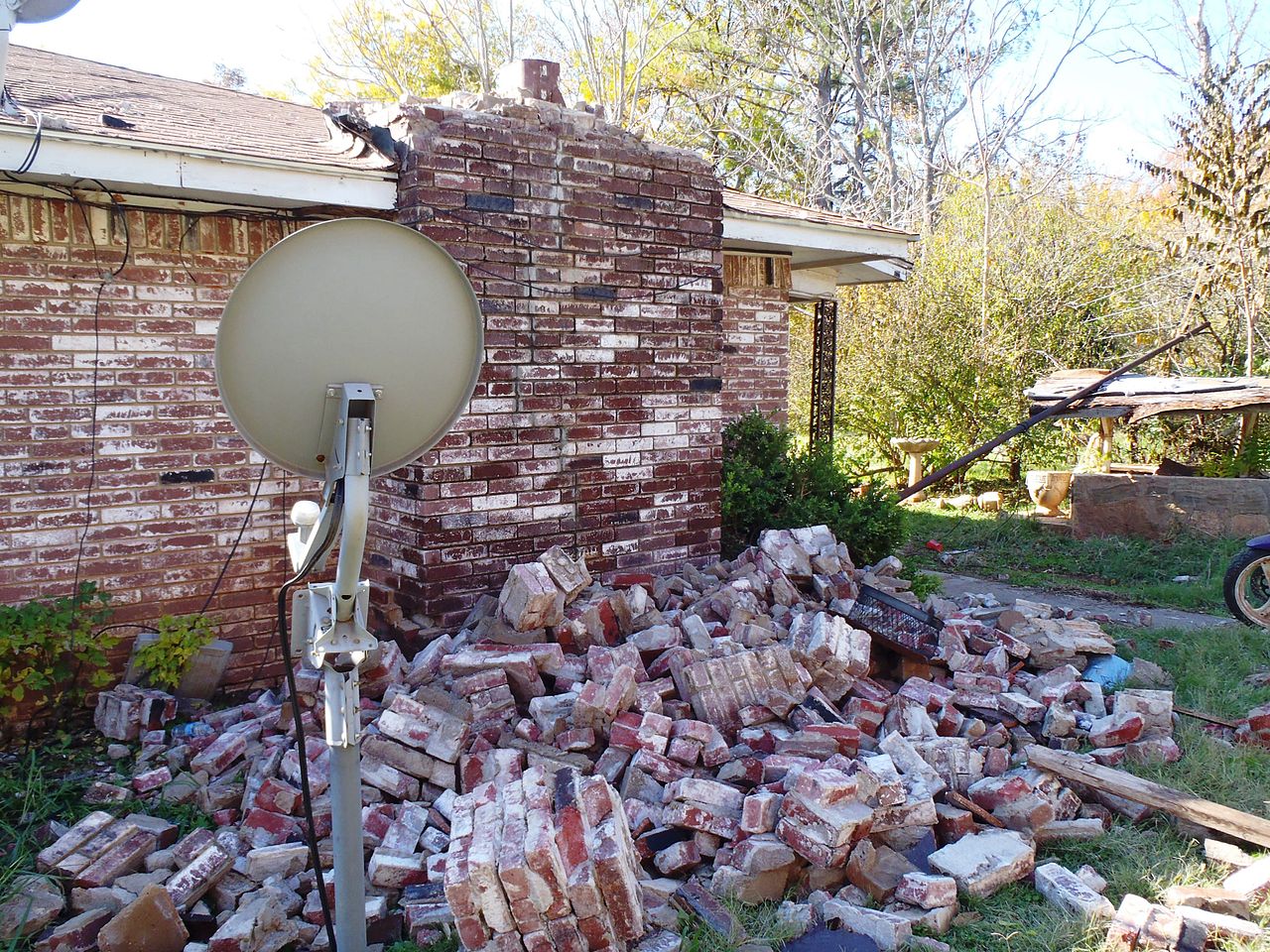
Just after 7:00 a.m. on September 3, 2016 parts of Missouri, Kansas, Oklahoma, Texas, Iowa, Nebraska, and Arkansas experienced a 5.7 magnitude earthquake which originated in northwest Oklahoma. The cause may be due to the practice of disposing oil and gas field wastewater deep underground. The temblor was similar to one experienced in the same location in November of 2011, although this recent earthquake lasted longer.

In Pawnee County, Oklahoma, the epicenter of the quake, reports damaged masonry structures, and one man was injured when part of a fireplace fell on him as he protected his child. In Kansas City, several reports have already been made by homeowners who noted that their brick chimney is cracked severely.

Masonry chimneys are particularly susceptible to damage by earthquake. Due to the nature of their rigid structure, chimneys are likely to crack while being shaken by a tremblor. Parts that can be damaged are mortar joints inside and out, bricks, stones, blockwork, flue liners, fireplaces, smoke chambers, and interior facial walls.


Photo by Brian Sherrod, United States Geological Survey - United States Geological Survey Multimedia Gallery, Public Domain, https://commons.wikimedia.org/w/index.php?curid=39847217

As a matter of precaution, we suggest that homeowners inspect their chimney immediately after an earthquake, both inside and out, then call a professional chimney sweep to do a more thorough inspection with a chimney camera system and a keen eye trained to find things homeowners may miss.

Tips:
  • Look for obvious fresh clean breaks in the mortar, bricks or stone on the exterior chimney and foundation
  • See if there are any pieces of masonry lying on the ground or on the roof.
  • Check the facial wall inside the house above and around the fireplace opening and note any fresh breaks
  • Examine the brick firebox (fireplace) and look for fresh cracks
  • Take photos of your findings and note the date and time
  • Have a professional chimney sweep examine the interior smoke chamber and flue liner for any fireplaces or the flue liner for the utility flue, and the entire exterior chimney after an earthquake
While the most severe damage will occur near the epicenter of an earthquake, chimneys in any location that experience shaking should be inspected, even if there is no visible exterior damage. The interior flue liner may be damaged with no indication of this on the exterior chimney chase.
Chimneys on commercial buildings, churches, and schools should be examined thoroughly by a professional immediately after an earthquake.

A damaged chimney can be a danger to occupants or passersby. If damaged badly enough a facial wall or chimney may partially or completely fall down. Cracks in the flue or smoke chamber can allow deadly Carbon Monoxide to enter the interior of the house or building. CO is odorless, tasteless, and silent.  CO alarms do not alert occupants if the air being checked is less than 9 ppm (parts per million), and it is known that low levels of Carbon Monoxide can cause long term irreversible brain damage. Visit www.coheadquarters.com for more information on Carbon Monoxide.

To find a CSIA Certified Chimney Sweep in your area visit www.csia.org or www.mcsc-net.org. In Kansas City visit www.chimkc.com.
________________________________________

Marge Padgitt is a CSIA Certified Chimney Sweep, NFI Certified Woodburning Specialist, and is a 30-year industry veteran. She is an author and speaker, and CEO of HearthMasters, Inc. in Kansas City. Contact her at margepadgitt@comcast.net or 816-461-3665.