Search This Blog

Showing posts with label draft. Show all posts

Monday, February 26, 2018

Negative House Pressure Problems

Smoking Fireplaces & Stoves —Smelly Fireplaces—Poor Indoor Air Quality


Many homes have negative pressure problems—this is common when homes are tightly insulated, or in larger or multi-story houses.  Not enough make-up air can get in the house for all of the things that need air, like fireplaces, wood stoves, gas ranges, furnaces water heaters — and people. Sick House Syndrome can also be a result of this issue and it is more common than most people think. 

Symptoms: Fireplaces or wood stoves smoke or smell when a second fireplace is used or when a furnace kicks on - or even when none of these things happen. This is because the furnace or fireplace needs air for combustion, and takes it from the place of least resistance which is often a fireplace.  This is a house problem—not a chimney problem.

When an exhaust fan is used in the kitchen or bath, or the furnace is used, this makes the problem worse.  You may notice cold air drafts coming from fireplaces, fireplaces that smoke, Carbon Monoxide backup from the furnace, gas fireplace, or hot water heater, or leaky doors and windows. These are all symptoms of negative pressure in the house. Sometimes unexplained illness and flu like symptoms can be an indication of negative house pressure as well.

GAS appliances may backdraft Carbon Monoxide without the occupant's knowledge - CO is odorless, colorless, and tasteless. Tip: don't ignore CO alarms-if one goes off there is a reason. 

 Solutions to the problem: 

The Draw Collar has an electric element that keeps the flue heated so that draft is always established and going up and out of the chimney. In addition to reducing or eliminating smells from the flue the inducer prevents back-drafting and smoking issues when starting a fire or at the end of the fire while it is cooling down. We recommend installation of a draft inducer with every stove insert or freestanding stove on a lower level of a home. However, it does not address the rest of the appliances or house. 


Condar through the wall ventilator: The Condar ASV-90 provides the ventilation you need without the drafts, energy loss and security concerns of an open window. Open windows can give you a blast of arctic air–along with dust, noise, and security concerns. The ASV-90 delivers diffused, filtered, fresh air quietly and efficiently. This is installed in a wall in the room where an appliance does not properly draft. 


NEW: The Padgitt MHV (Make-up Air Ventilator) system brings in needed air on demand from the house, heats it during the winter months, then distributes air through the house through the cold air returns. This supplies needed combustion air for all appliances in the house including the furnace, hot water heater, and fireplaces.  It also re-supplies the house with 6 fresh air exchanges per day as recommended by the EPA for occupants to breathe. Better health is a side-effect of this installation. A handy person, HVAC Tech, or Chimney Tech can do the installation. Sized to the house. 
See more information at www.chimkc.com
_____________________________________________________________________________

Marge Padgitt is the CEO of HearthMasters, Inc. She is the publisher of Wood-Fired Magazine and and author of chimney and venting books and articles. Marge is a CSIA Certified Chimney Sweep and NFI Certified Wood-Burning Specialist. Contact Marge at hearthmastersboss@gmail.com 


Tuesday, March 24, 2015

Is your chimney tall enough to work right?


By Marge Padgitt

Fireplaces and wood-burning stoves only work right when everything is built or installed correctly, and that includes the height of the chimney. There are several factors to take into consideration when planning for the termination height of a masonry or factory built chimney system. 

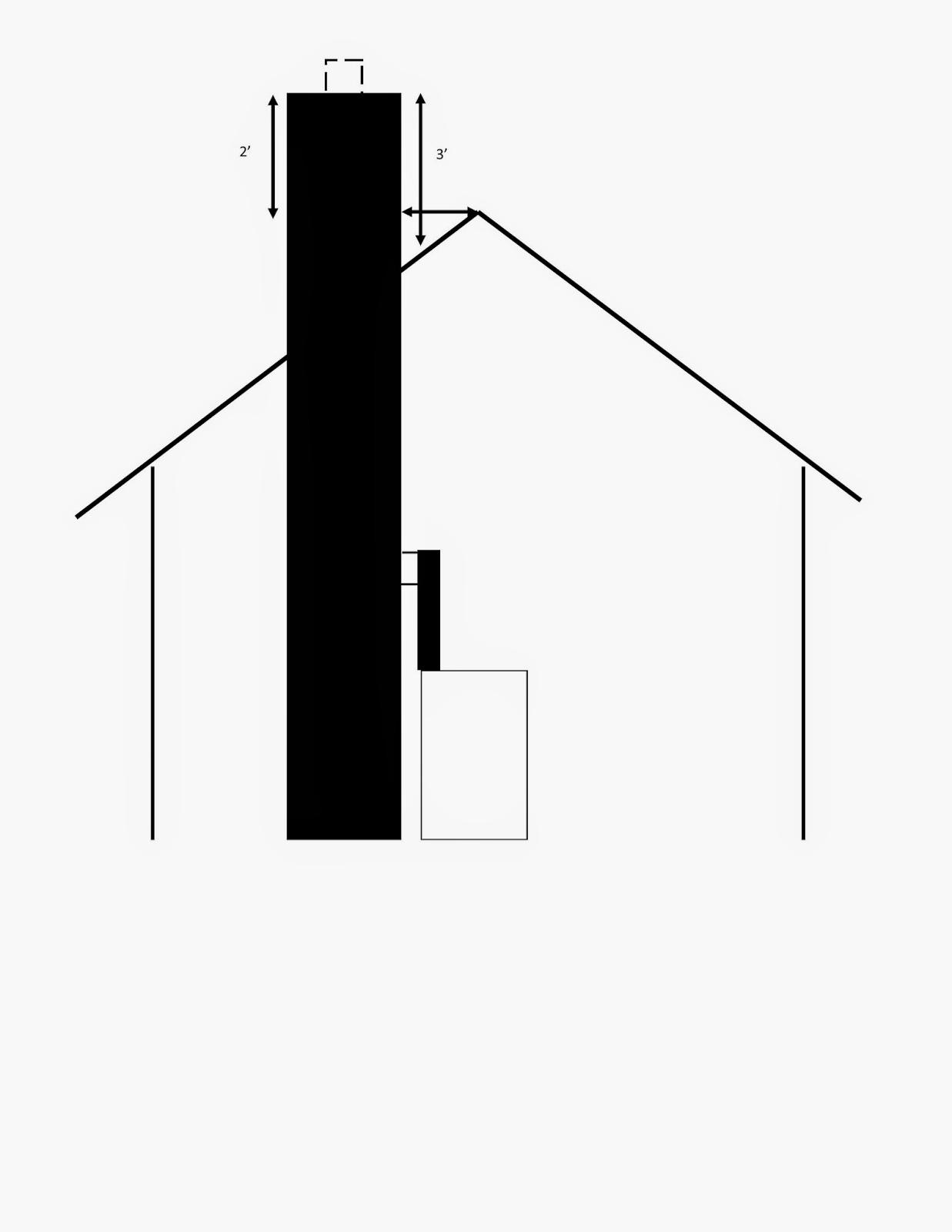
When building, or rebuilding, a chimney the builder should check the height to be sure that it not only conforms to National Fire Protection 211 Standards, which is the standard used in the industry for chimney construction, but also conforms to International Residential Code requirements. Both the standard and the code require that a chimney be three feet taller than the high side of the roof where it exits, and two feet taller than anything (roof, trees, dormers, etc.) within ten feet.  This is the first step in determining what the finished height of the chimney should be. If a fireplace smokes, the height of the chimney could be a factor.

Short flues: Additionally, keep in mind that a short flue (under 12’) may not draft correctly, so the chimney height may need to be extended if a fireplace is on an upper level of the home. It is generally accepted in the industry, although not a code requirement that flues under 12 or


15 feet in height may not draft well.  This may mean that the chimney height needs to be taller than code requires so it will function properly. 

Stack effect: The second factor to consider is the construction of the home. If a chimney is located on a room addition or end of a house, and the main section of the house is taller than the chimney, the house will act like a chimney and pull air upwards. This can cause what is known as “Stack Effect,” and pull smoke back in to the house from the fireplace while it is in operation, and smells when it is not in use.  For this reason, always plan the location of a chimney carefully. 

Trees: If trees or branches are within ten feet of the chimney they can affect draft and cause downdrafts.  If necessary, have trees and limbs cut back further than ten feet away.  

What not to do: Don’t ever add a section of tile flue liner to the chimney to make it taller without extending the exterior brick chase at the same time. Flue liner joints must be below the exterior in order to prevent them from falling over, and if installed incorrectly can be a hazard. 

Homeowners may want to consult with their professional chimney sweep before adding a room addition or constructing a new home to determine the best location for the chimney and fireplace. In some cases, the chimney simply cannot draft correctly due to the location and house construction, and it may need to be built higher, or removed altogether. An alternative fireplace, such as a direct vent gas insert, may be a good alternative to an open wood-burning fireplace in

some cases. Direct vent fireplaces are closed sealed systems that use outside air for combustion and are not as affected by the house construction as open fireplaces. 
___________________________________________________

Marge Padgitt is a CSIA Certified Chimney Sweep and NFI Certified Woodburning Specialist. She is a 30-year industry veteran and has written over 200 articles. Marge is the author of The Chimney and Hearth Pro's Resource Book and The Homeowner's Chimney and Fireplace Manual. See more info at www.hearthmasters.net.