Search This Blog

Wednesday, November 29, 2023

Biomass Tax Credit for Wood and Pellet Stoves


By Marge Padgitt

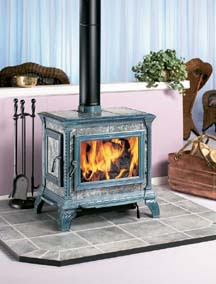
Homeowners planning to install an alternative heating appliance should review the Biomass Tax Credit that provides an incentive for homeowners to install highly efficient wood and pellet stoves and fireplace inserts. This tax credit, which runs from January 1st, 2023, to December 31st, 2032, allows eligible taxpayers to receive a credit of 30% of the purchase and installation costs, up to $2,000 annually.

The Biomass Tax Credit, enacted as part of the Inflation Reduction Act, was implemented to promote the adoption of more sustainable and efficient heating options in residential properties. This tax credit is applicable to wood and pellet stoves that meet specific criteria. To qualify for the credit, the stoves must have a thermal efficiency of at least 75% per the higher heating value (HHV) of the fuel and be listed as an approved appliance. The tax credit is available for purchases and installations completed between January 1, 2023, and December 31, 2032.

In recent years, wood-burning appliance manufacturers have improved efficiency over their older models. Biomass fuel, which includes wood and wood-derived pellets, offers several advantages over traditional heating methods. One of the key benefits is its lower carbon footprint compared to fossil fuels. Biomass fuel is considered renewable as it is derived from organic materials, such as wood waste and agricultural crops. When burned in high-efficiency stoves, biomass fuel emits minimal greenhouse gases, contributing to reduced environmental impact. Additionally, biomass fuel is often sourced locally, supporting local economies and reducing dependence on foreign energy sources.

It is important to choose a stove that meets the thermal efficiency requirements to be eligible for the tax credit. Not all stoves meet these standards. There are stoves available at large box stores that do not meet the requirements, so choose a reputable hearth retailer or chimney service company to get a quality appliance. To identify qualifying products, individuals can refer to the Environmental Protection Agency's certified wood heater database, which lists stoves with efficiencies of at least 75%. Ask your hearth retailer or chimney sweep about the stoves they carry that qualify for the tax credit.

To claim the Biomass Tax Credit, homeowners must keep receipts for the purchase and installation, and the manufacturer's tax credit certificate. The manufacturer's certificate can typically be found on the manufacturer's website and should include information such as the manufacturer's name and address, the stove's make and model, proof of eligibility, and the manufacturer's signature. When filing taxes, individuals should complete Form 5695, available from the Internal Revenue Service (IRS), and include the necessary information, or give the information to your accountant. The credit offsets tax you owe, and it is not a refund.

Several manufacturers sell wood and pellet stoves that qualify for the Biomass Tax Credit. These include Regency, Quadra-Fire, Harman, Hearthstone, and Vermont Castings.

Like any heating system, biomass stoves require regular maintenance to ensure optimal performance and safety. Contact a professional chimney sweep for this service. Stoves should be swept annually for standard use, or bi-annually if used for continual heating purposes in order to remove flammable creosote. Only burn cordwood in the appliance and never burn treated wood, hedge, paper, or railroad ties. It is critical to follow the manufacturer's guidelines for cleaning, inspection, and maintenance.

-----------------------------------------------------------------------

Marge Padgitt is the president of HearthMasters, Inc. in Independence, Missouri. She is the author of Wood-Fired Heating and Cooking and The Chimney and Hearth Pro's Resource Book. www.chimkc.com


Sunday, December 11, 2022

Holiday Decor Ideas for Fireplaces

 During the holidays, people usually place decor on mantels and around the focal point of the house - the fireplace. Here are some inspiring ideas. Remember to keep stockings away from the front of the fireplace as they can be a fire hazard, and never burn a Christmas tree in the fireplace because they burn too hot and too fast and can cause a house fire. 


Fireplace not working? No problem - use candles for a welcoming atmosphere. 


Above and left: These faux fireplaces work great for focal points for your holiday decorations. 


Real fireplace - real fire - and nice decor without any stockings hanging down in front of the fireplace. We give this one an A+!


Whoops!  Looks nice, but do you see the problem? 


A stunning historical fireplace that is nicely done

-----------------------------------------------------------

Marge Padgitt is the president of HearthMasters, Inc. and author of Wood-Fired Heating and Cooking. www.woodfiredpub.com or www.chimkc.com. Sign up for blog notices so you don't miss an article!

Tuesday, June 7, 2022

Everyone Needs a Wood Stove for Emergency Heating!

With the economy in shambles and the cost of everything going up, including oil, gas, and electricity, the one piece of advice I can give to people is this:


Everyone needs a wood-burning stove or fireplace insert in their home for emergency heating and NOW is the time to buy!
 
Wood-burning stove insert by Regency

  •  Wood-burning stoves work without the use of electricity or fans (unlike gas furnaces or pellet stoves).
  •  Wood stoves and inserts produce TWICE the amount of heat (BTU's) than gas stoves or inserts!
  •  Fuel is readily available either by using your own trees on site or purchasing through a firewood dealer. Tip: Buy NOW.
  •  No electricity is needed for a wood stove or insert to work! In case of emergency when the power is out you'll be able to stay in your home instead of going to stay with friends or family or going to a hotel.
  •  With a freestanding stove you can cook on the top if needed.

Freestanding wood-burning stove by Hearthstone
Use a wood-burning stove during fall and winter as a supplemental heating source to save money and provide a more comfortable, even heat. Radiant heat from a wood stove or masonry heater has more health benefits than a gas furnace or electric baseboard heaters.

Good quality wood stoves aren't inexpensive - but they are worth the investment. A good stove will last many years. Note: beware of box store wood stoves that have no or limited warranty and may burn out after a few seasons. 

New EPA approved wood-burning stoves and inserts are 75%+ efficient which means that most of the heat is staying in your house rather than going up the flue as with a standard open fireplace. 

 
Bonus: Get a TAX CREDIT for an efficient wood stove or insert up to 26% in 2022 and that includes labor and all materials!

Call us if you are in the greater Kansas City area or another professional chimney sweep our hearth dealer to discuss upgrading your inefficient open fireplace to a high-efficiency wood-burning insert, or if no fireplace is available you can have a freestanding wood stove along with a Class A chimney or stainless steel chimney liner installed. Note: These appliances can ONLY be installed in MASONRY chimneys or with a CLASS A chimney.

A word about GAS: If you have a gas-burning insert or stove, it will likely work with no power available. They just produce HALF the amount of heat as a wood-burning appliance.

Note: Blowers on gas or wood-burning appliances will NOT work unless you have a generator. But they will still provide heat. 
 
Find a professional installer at www.nficertified.org or www.csia.org. 

_____________________________

Marge Padgitt is a chimney industry veteran and author of Wood-Fired Heating and Cooking and the Chimney Pro's Resource Book. She is a speaker, talk show guest, and instructor. Visit www.chimkc.com or www.hearthmasters.net for more information.

Monday, August 2, 2021

Efficient Heating with Wood and a Tax Credit to Boot!

Have your cake and eat it too, as they say. Homeowners who purchase a high-efficiency wood-burning appliance in 2022 and 2023 can take advantage of not only efficient and clean-burning heat but receive a nice tax credit as well.

People living off grid or who aspire to a self-sufficient lifestyle love using wood-burning appliances for heating, and in some cases, cooking. Anyone who heats with wood will attest to the fact that it is much less expensive than forced air appliances or electric heating, especially if they can fell trees off of their own land, but the benefits don’t end there. The healing radiant energy produced is a welcome effect for arthritis and fibromyalgia sufferers. Not to mention that sitting in front of a toasty fire in the middle of winter just cannot be beat.

Freestanding stove
Wood-burning freestanding stoves can be installed in almost any location in a home and use a Class A metal chimney or can be connected to a masonry chimney with a stainless-steel flue liner. Wood-burning fireplace inserts may be installed into a masonry fireplace with a masonry chimney with the use of a smaller stainless steel flue liner. They cannot be installed in prefabricated metal fireplaces or use a prefabricated metal chimney. This applies to pellet stoves and inserts as well with a different type of vent.

Anytime changes are made to a fireplace a Level 2 camera inspection is required in most jurisdictions and recommended in any case. A professional CSIA Certified Chimney Sweep should do this inspection. Find one at www.csia.org.

Site built masonry heater by
Gene Padgitt

Masonry heaters are site-built masonry appliances with interior channels that trap heat. The
masonry absorbs the heat, then releases it into the room. Houses with open floor plans are best suited to this type of heater since it does not use fans or ducts to distribute heat. Radiant heat is emitted from all four sides of the appliance. There are kits manufactured which may include only the heater core, or the entire finished product. Heater masons also build masonry heaters without kits.  Masonry heaters are the most efficient type of wood-burning appliance, and they use 2/3 less wood than a high-efficient wood-burning stove. For more information visit www.chimkc.com or www.mha-net.org.

In recent years, the wood-burning industry has modified and improved their products to the point that they now produce extremely efficient appliances that burn clean with little emissions. Some are better than others, but appliances with an efficiency rating of 75% or higher and approved by the EPA (Environmental Protection Agency), will provide home heating and be eligible for the credit. Older, less efficient appliances do not qualify for the tax credit.

Appliances that were made prior to 1989 likely do not meet the earlier EPA standards and therefore, are not allowed to be installed in homes. So, think twice before purchasing a used woodstove.

The U.S. Biomass Tax credit allows for a tax credit of 26% of the purchase and installation costs for eligible products purchased and installed between January 1, 2021 and December 31, 2022. Appliances must have an efficiency rating of 75% or more.

For eligible products purchased and installed between January 1, 2023 and December 31, 2023, the tax credit is reduced to 22% of the purchase and installation costs. Any eligible product purchased in 2020 but installed in 2021, can be claimed on a 2021 tax return. Products must be claimed on the tax return year in which the product installation is complete. Keep your receipts for your accountant and register your appliance on the manufacturer website.

The nice thing about this government offer, which likely will not be repeated, is that not only is the appliance itself covered in the Tax Credit, but the chimney pipe or flue liner and labor for installation as well. This can add up to a hefty amount.

Now for the not-so-good news: Be prepared for a long wait time for your new appliance since manufacturers are having a hard time keeping up with the demand. And prices on everything have gone up and will likely continue to climb. So, order that new appliance now even if you have to wait a few months for the installation.

Marge Padgitt is a chimney industry veteran and author of Wood-Fired Heating and Cooking. Reach her at hearthmasters.office@gmail.com. 

Thursday, July 29, 2021

Be prepared for sticker shock - prices are going up on everything


Consumers should be prepared for sticker shock when it comes to chimney repair or hearth appliances, since everything has gone up in price. Not only that, but wait times can be weeks or months due to the increased demand. Manufacturers are having a difficult time keeping up with the demand for products. 

This is frustrating for the homeowners and their providers as well. In some cases, standard freight costs no longer exist and the dealers must pay whatever the freight lines charge. This makes it impossible to tell a buyer what their final price will be for a hearth appliance.

  • Aluminum prices have increased by 20%
  • Cold Rolled steel has increased by 160%
  • Stainless steel price increase is 10%
  • Lumber price increase is 130%

Domestic Freight has increased by 5% and is expected to rise due to gas price increases. 

Expect to pay more for gas hearth appliances, wood-burning stoves and inserts, aluminum flue liners for gas, and stainless steel flue liners and chimneys for wood-burning appliances, plus additional freight cost. 

There is some good news, however. The 26% tax credit is in effect, so could offset costs for a hearth appliance and it's chimney, plus installation costs. For this reason, now is the time to purchase a hearth appliance.  Read more about the tax credit at the Hearth, Patio, and Barbecue website.  

_____________________________________

Marge Padgitt is the CEO of HearthMasters, Inc. chimney & fireplace restoration company in Kansas City, Missouri.