Search This Blog

Tuesday, June 7, 2022

Everyone Needs a Wood Stove for Emergency Heating!

With the economy in shambles and the cost of everything going up, including oil, gas, and electricity, the one piece of advice I can give to people is this:


Everyone needs a wood-burning stove or fireplace insert in their home for emergency heating and NOW is the time to buy!
 
Wood-burning stove insert by Regency

  •  Wood-burning stoves work without the use of electricity or fans (unlike gas furnaces or pellet stoves).
  •  Wood stoves and inserts produce TWICE the amount of heat (BTU's) than gas stoves or inserts!
  •  Fuel is readily available either by using your own trees on site or purchasing through a firewood dealer. Tip: Buy NOW.
  •  No electricity is needed for a wood stove or insert to work! In case of emergency when the power is out you'll be able to stay in your home instead of going to stay with friends or family or going to a hotel.
  •  With a freestanding stove you can cook on the top if needed.
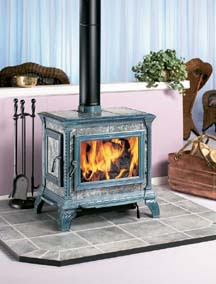
Freestanding wood-burning stove by Hearthstone
Use a wood-burning stove during fall and winter as a supplemental heating source to save money and provide a more comfortable, even heat. Radiant heat from a wood stove or masonry heater has more health benefits than a gas furnace or electric baseboard heaters.

Good quality wood stoves aren't inexpensive - but they are worth the investment. A good stove will last many years. Note: beware of box store wood stoves that have no or limited warranty and may burn out after a few seasons. 

New EPA approved wood-burning stoves and inserts are 75%+ efficient which means that most of the heat is staying in your house rather than going up the flue as with a standard open fireplace. 

 
Bonus: Get a TAX CREDIT for an efficient wood stove or insert up to 26% in 2022 and that includes labor and all materials!

Call us if you are in the greater Kansas City area or another professional chimney sweep our hearth dealer to discuss upgrading your inefficient open fireplace to a high-efficiency wood-burning insert, or if no fireplace is available you can have a freestanding wood stove along with a Class A chimney or stainless steel chimney liner installed. Note: These appliances can ONLY be installed in MASONRY chimneys or with a CLASS A chimney.

A word about GAS: If you have a gas-burning insert or stove, it will likely work with no power available. They just produce HALF the amount of heat as a wood-burning appliance.

Note: Blowers on gas or wood-burning appliances will NOT work unless you have a generator. But they will still provide heat. 
 
Find a professional installer at www.nficertified.org or www.csia.org

_____________________________

Marge Padgitt is a chimney industry veteran and author of Wood-Fired Heating and Cooking and the Chimney Pro's Resource Book. She is a speaker, talk show guest, and instructor. Visit www.chimkc.com or www.hearthmasters.net for more information.

Monday, August 2, 2021

Efficient Heating with Wood and a Tax Credit to Boot!

Have your cake and eat it too, as they say. Homeowners who purchase a high-efficiency wood-burning appliance in 2022 and 2023 can take advantage of not only efficient and clean-burning heat but receive a nice tax credit as well.

People living off grid or who aspire to a self-sufficient lifestyle love using wood-burning appliances for heating, and in some cases, cooking. Anyone who heats with wood will attest to the fact that it is much less expensive than forced air appliances or electric heating, especially if they can fell trees off of their own land, but the benefits don’t end there. The healing radiant energy produced is a welcome effect for arthritis and fibromyalgia sufferers. Not to mention that sitting in front of a toasty fire in the middle of winter just cannot be beat.

Freestanding stove
Wood-burning freestanding stoves can be installed in almost any location in a home and use a Class A metal chimney or can be connected to a masonry chimney with a stainless-steel flue liner. Wood-burning fireplace inserts may be installed into a masonry fireplace with a masonry chimney with the use of a smaller stainless steel flue liner. They cannot be installed in prefabricated metal fireplaces or use a prefabricated metal chimney. This applies to pellet stoves and inserts as well with a different type of vent.

Anytime changes are made to a fireplace a Level 2 camera inspection is required in most jurisdictions and recommended in any case. A professional CSIA Certified Chimney Sweep should do this inspection. Find one at www.csia.org.

Site built masonry heater by
Gene Padgitt

Masonry heaters are site-built masonry appliances with interior channels that trap heat. The
masonry absorbs the heat, then releases it into the room. Houses with open floor plans are best suited to this type of heater since it does not use fans or ducts to distribute heat. Radiant heat is emitted from all four sides of the appliance. There are kits manufactured which may include only the heater core, or the entire finished product. Heater masons also build masonry heaters without kits.  Masonry heaters are the most efficient type of wood-burning appliance, and they use 2/3 less wood than a high-efficient wood-burning stove. For more information visit www.chimkc.com or www.mha-net.org.

In recent years, the wood-burning industry has modified and improved their products to the point that they now produce extremely efficient appliances that burn clean with little emissions. Some are better than others, but appliances with an efficiency rating of 75% or higher and approved by the EPA (Environmental Protection Agency), will provide home heating and be eligible for the credit. Older, less efficient appliances do not qualify for the tax credit.

Appliances that were made prior to 1989 likely do not meet the earlier EPA standards and therefore, are not allowed to be installed in homes. So, think twice before purchasing a used woodstove.

The U.S. Biomass Tax credit allows for a tax credit of 26% of the purchase and installation costs for eligible products purchased and installed between January 1, 2021 and December 31, 2022. Appliances must have an efficiency rating of 75% or more.

For eligible products purchased and installed between January 1, 2023 and December 31, 2023, the tax credit is reduced to 22% of the purchase and installation costs. Any eligible product purchased in 2020 but installed in 2021, can be claimed on a 2021 tax return. Products must be claimed on the tax return year in which the product installation is complete. Keep your receipts for your accountant and register your appliance on the manufacturer website.

The nice thing about this government offer, which likely will not be repeated, is that not only is the appliance itself covered in the Tax Credit, but the chimney pipe or flue liner and labor for installation as well. This can add up to a hefty amount.

Now for the not-so-good news: Be prepared for a long wait time for your new appliance since manufacturers are having a hard time keeping up with the demand. And prices on everything have gone up and will likely continue to climb. So, order that new appliance now even if you have to wait a few months for the installation.

Marge Padgitt is a chimney industry veteran and author of Wood-Fired Heating and Cooking. Reach her at hearthmasters.office@gmail.com. 

Thursday, July 29, 2021

Be prepared for sticker shock - prices are going up on everything


Consumers should be prepared for sticker shock when it comes to chimney repair or hearth appliances, since everything has gone up in price. Not only that, but wait times can be weeks or months due to the increased demand. Manufacturers are having a difficult time keeping up with the demand for products. 

This is frustrating for the homeowners and their providers as well. In some cases, standard freight costs no longer exist and the dealers must pay whatever the freight lines charge. This makes it impossible to tell a buyer what their final price will be for a hearth appliance.

  • Aluminum prices have increased by 20%
  • Cold Rolled steel has increased by 160%
  • Stainless steel price increase is 10%
  • Lumber price increase is 130%

Domestic Freight has increased by 5% and is expected to rise due to gas price increases. 

Expect to pay more for gas hearth appliances, wood-burning stoves and inserts, aluminum flue liners for gas, and stainless steel flue liners and chimneys for wood-burning appliances, plus additional freight cost. 

There is some good news, however. The 26% tax credit is in effect, so could offset costs for a hearth appliance and it's chimney, plus installation costs. For this reason, now is the time to purchase a hearth appliance.  Read more about the tax credit at the Hearth, Patio, and Barbecue website.  

_____________________________________

Marge Padgitt is the CEO of HearthMasters, Inc. chimney & fireplace restoration company in Kansas City, Missouri. 

Wednesday, February 17, 2021

DANGER: Do NOT Use a Standard Open Fireplace to Heat Your House!

As fire investigators we see many house fires each year when homeowners attempt to heat their home with a fireplace that is not designed for such a task. During extremely cold weather or an electrical outage such as those being experienced around the country right now some people are using their fireplace for heating purposes. The problem is that most open gas or wood-burning fireplaces are not designed for extended use, and by operating an appliance for more than a few hours at a time is a recipe for disaster. 

Note: There are some exceptions to this - there are some heat circulating fireplaces available that are designed for heating. Some of these types of fireplaces have tubes that vent out the top of the fireplace, or into ducts. And Rumford style fireplaces are also designed for heating.

What most people are unaware of is that with a manufactured fireplace the framing is wood, which can ignite if it is exposed to heat over a long period of time, or if the fireplace is used for large fires. And even masonry chimneys often have wood framing hidden next to the structure or behind the face wall and can ignite and cause a house fire, especially if it is exposed to heat over a long period of time.

Most house fires we see that are related to chimneys and heating appliances are caused by improper construction and lack of proper clearance to combustible framing. 

Especially problematic: 

  • Non-Venting gas logs which burn very hot. These should only be used for four hours at a time and with an open window. Read the manufacturer manual and follow the instructions. Non-venting gas logs should NEVER be installed into a manufactured fireplace.
  • Manufactured wood or gas fireplaces are U.L. listed as decorative appliances and should only be used for a few house at a time. Read the operation manual and follow the instructions.
  • Wood-burning or gas logs in a standard open masonry fireplace should only be used for a few hours at a time. These are also listed as decorative appliances, and are designed for ambience only. Standard fireplaces actually take more heat from a house than they put into it. A person will feel warm near the fireplace, but the rest of the house cools off.

Homeowners should have a chimney fire extinguisher on hand at all times and working smoke detectors on each floor. If a fire occurs, get out of the house and call the fire department. 

In order to properly provide heating the following are recommended: 

  • A freestanding wood or gas-burning stove or a fireplace insert. Together with their flue liners, these types of appliances are designed for heating purposes.
  • A circulating type fireplace such as New Aire or Heatilator brands. These are enclosed in masonry and should be installed by a qualified professional.
  • A Rumford fireplace built by a qualified Rumford mason. Even though this is an open fireplace, it is designed for heating purposes.
  • A Masonry heater built by a qualified masonry heater builder.

Note: in 2021 consumers may take a 26% tax credit on approved appliances, including labor and materials.Ask your hearth dealer or chimney sweep about this incentive program. 

Tips: 

Have all appliances inspected annually or more often if used for heating purposes by a qualified professional chimney sweep

Read the instruction manual with any set of gas logs or a manufactured fireplace for safe operation. If none exists, look it up on the internet. Most manuals are posted. 

Use the appliance per the manufacturer or builder recommendations and do not burn large fires, install a larger grate, or burn anything other than seasoned cordwood.

__________________________

Marge Padgitt is the co-owner and President of Padgitt Forensic Investigations, and HearthMasters, Inc. in Kansas City, Missouri. She is the author of Wood-Fired Heating and Cooking, and The Chimney and Hearth Pro's Resource Book. Reach her at hearthmastersboss@gmail.com, or 816-461-3365. Her website is www.chimkc.com.


Friday, February 12, 2021

Firewood Allergies? Yes, it’s a Thing.

 By Audrey Elder

The massive chunk of walnut sat nearly a year next to the woodpile before we gave up on the idea of turning it into a new kitchen floor. Our woodpile consists of whatever fallen trees come our way. This particular behemoth was once part of a massive tree that fell on a friend’s farm property with no where to go but my yard. It was finally time for gloves, glasses and a chainsaw. The freshly cut chunks were quickly split into perfectly sized pieces for the woodstove. They smelled wonderful as I stacked them onto the pile, although my nose burned a bit with each whiff I took. Once alit in the living room, my sinuses reacted with vengeance. As it turns out, different kinds of firewood can create allergic reactions for different people. One might notice a sensitivity to oak while I sit on the other side of the room when burning walnut.

There are a large range of allergic reactions or sensitivities that can be brought on by wood including a sinus reaction or rash from touching wood. Nearly all woods have the potential to cause a reaction in some people. Unfortunately, there has been little research done on how different woods can cause a reaction when burned. It is unknown if having a known allergy to a specific wood based on a physician performed allergy test also means you will have a reaction to burning that wood. If you have a known allergy to mold however, make sure you are not burning firewood with mold present. If you have experienced sensitivity to your fireplace or woodstove keep a journal of what type of wood you are burning and if that particular wood is bothering you. If a type or types are confirmed this way try to avoid sitting close to the fireplace or stove or discontinue using that type all together.

It is also important to note that smoke never has a place in the home, it should only be going up the chimney. We often tend to think of keeping our chimney clean for the sole purpose of preventing a chimney fire. Where avoiding chimney fires is an obvious top priority, a dirty chimney won’t allow for a good draft to take place. It makes it harder to start a fire and keep all that smoke where it belongs. If you are still having trouble getting your fire to draft, it could be an issue of negative air pressure or just super cold air. Consider having an outside air supply, draft inducer, or whole house ventilator installed to fix this issue.

So far, walnut has been the only wood I have to avoid burning. I was overjoyed last summer when my husband announced a friend offered him a fallen….oak! An entire winter back in my favorite spot in the house, next to the woodstove was happily in my future. May your home be warm and your sinuses happy!